
The Fifth Element VHS
A closer look at this unusual The Fifth Element Special Widescreen Edition VHS box set, featuring individually numbered packaging and the substantial 240-page book documenting the making of Luc Besson's science-fiction classic.
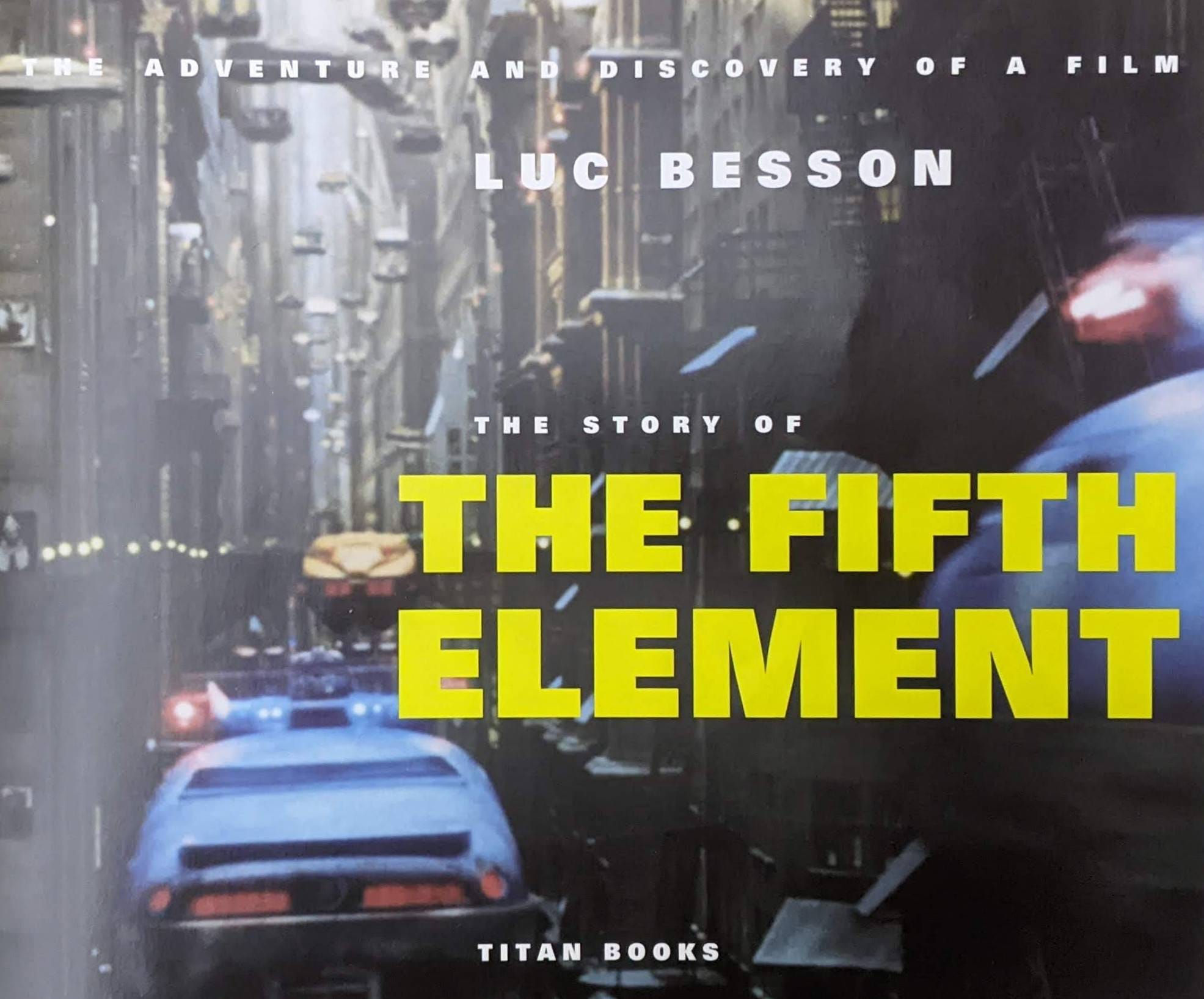
Some box sets are memorable because of the film they contain, while others stand out because of the thought and effort that has gone into the packaging and accompanying material. This particular release of The Fifth Element manages to do both, and it remains one of the more unusual and attractive VHS box sets in my collection.
I had already seen The Fifth Element on VHS and absolutely loved the film, so when I spotted this rather unusual box set for sale in my local HMV sometime around 1998, it was a no-brainer. I don't remember exactly what I paid for it, but I don't think it was particularly expensive at the time.
I have always thought this might have been an HMV exclusive, although I haven't been able to find anything definitive to confirm that. What I do know is that it was a particularly appealing purchase, combining the Special Widescreen Edition of the film with a substantial illustrated book documenting the making of the production.
Special Widescreen Edition + The Story of The Fifth Element
The Box
The first thing that catches your attention is the packaging itself. Rather than using a conventional rectangular VHS presentation, the box is designed to resemble the four elemental stones featured in the film. It is a distinctive design that immediately connects the physical packaging with the story and visual identity of The Fifth Element.

The outer box has a silky, smooth finish, giving it a rather premium feel. The lettering has a metallic silver appearance, which contrasts nicely with the darker artwork and adds to the overall presentation. It is a simple detail, but one that makes the box feel considerably more special than an ordinary VHS release.
Another interesting feature is that the metallic lettering and design details continue around all four edges of the box. The left-hand edge also displays the edition number. My copy is numbered 1686, giving it an individual identity and making it an interesting piece to own.
The box is also surprisingly substantial. Measuring 280mm square and 60mm deep, it is considerably larger than a standard VHS case and has a real presence on the shelf. With a weight of approximately 2kg, it is clear that this isn't just a lightweight promotional sleeve.
The dimensions and weight of my copy are:
- Width: 280mm
- Depth: 280mm
- Height: 60mm
- Weight: 2.0kg
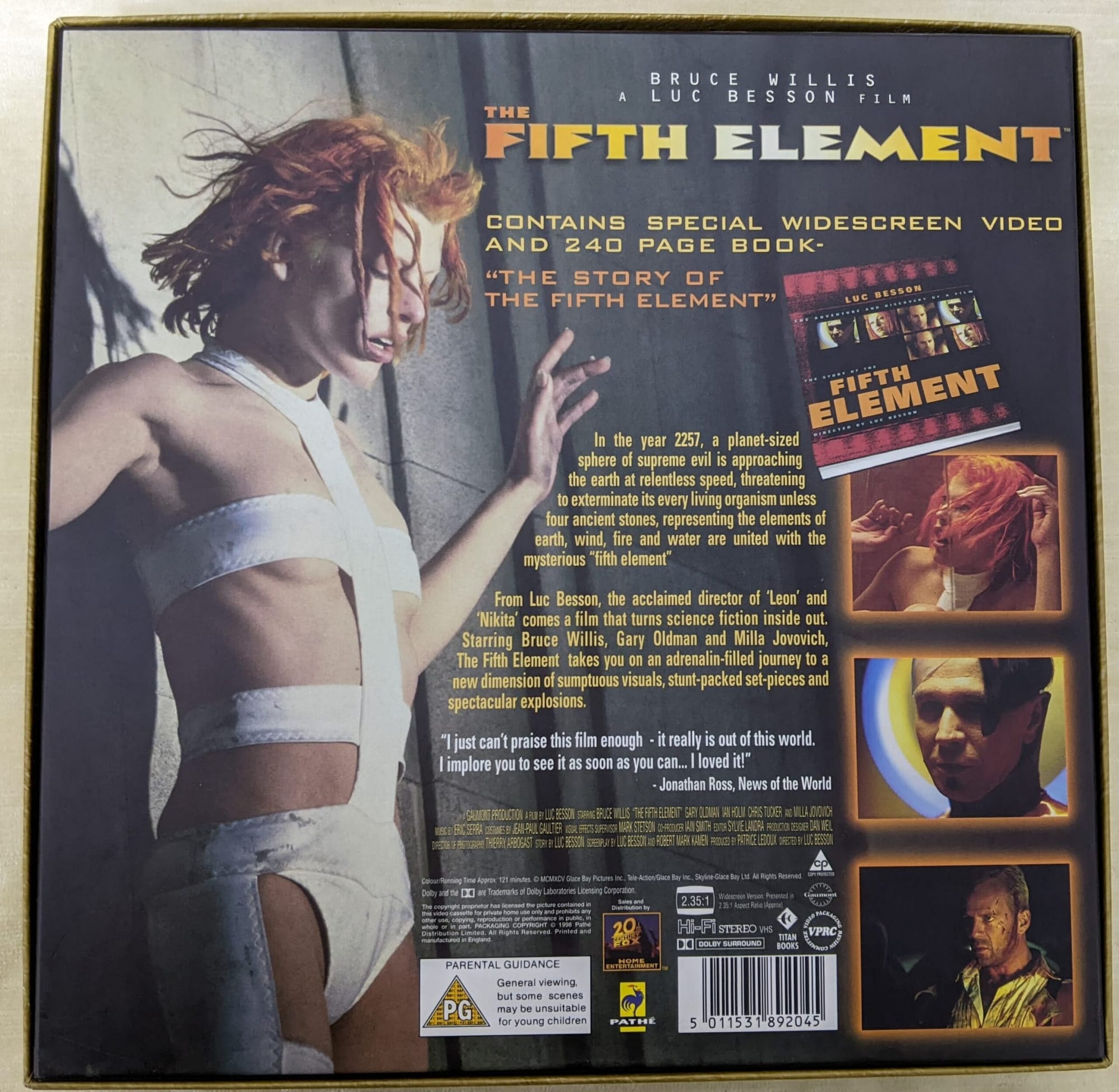
The reverse of the box features the film's synopsis, along with a review and the usual information you'd expect to find on a home-video release. Although the back is more conventional in its presentation, it provides a useful introduction to the film and completes the overall packaging.
What I particularly like about this box is that it doesn't simply use the book as an excuse to make the package larger. The design feels as though it was developed around the film's themes, and the unusual square format makes it stand out from the other VHS releases of the period.
The Story of The Fifth Element
For me, one of the most important parts of this collection is the accompanying book, The Story of The Fifth Element: The Adventure and Discovery of a Film, written by Luc Besson.
This is not a small promotional booklet or a collection of publicity photographs. It is a substantial illustrated publication, running to approximately 240 pages, dedicated to documenting the development and production of the film.
Published by Titan Books in 1997, the book provides a fascinating insight into Luc Besson's long journey towards bringing The Fifth Element to the big screen. The project had its beginnings many years before the film eventually entered production, with Besson developing the ideas that would ultimately become one of the most visually distinctive science-fiction films of the 1990s.

The book explores the challenges, frustrations and creative decisions involved in turning that original vision into a finished motion picture. Rather than simply presenting the finished film through a series of photographs, it offers a much more personal account of the production, told through Besson's own experiences and observations.
One of its most interesting features is a week-by-week production diary, illustrated with behind-the-scenes photographs. This gives the reader an opportunity to follow the progress of the production and see how the various elements gradually came together.
The book also includes:
- Luc Besson's account of the film's development and production.
- A week-by-week diary documenting the filmmaking process.
- Exclusive behind-the-scenes photography.
- Conceptual drawings and production artwork.
- Illustrations by comic-book artists Jean-Claude Mézières and Moebius.
- Costume designs by Jean-Paul Gaultier.
- Interviews and contributions from members of the creative team.
For anyone interested in film production, concept art or the creative process behind a major science-fiction film, this is a particularly interesting publication.
One of the things I like about the book is the variety of material included. Alongside photographs taken during production, there are drawings, sketches and other visual references that help demonstrate how the world of The Fifth Element was developed.
It is fascinating to see the relationship between the original artwork and what eventually appeared on screen. The film has such a distinctive visual style, and much of that identity comes from the imaginative work of the artists and designers involved.

This photograph shows material from week 17 of the production diary. These diary entries are particularly valuable because they provide a chronological account of the filmmaking process rather than simply presenting a collection of unrelated photographs.
It also gives the book a more personal quality, allowing the reader to follow the production as it developed.

The book also contains examples of the conceptual artwork that helped shape the film's distinctive appearance. The illustrations by Jean-Claude Mézières and other artists are particularly interesting, showing the creative thinking that went into designing the environments, characters and various elements of this futuristic world.

Another example of the artwork included in the book, featuring illustrations associated with Garcia, Jean-Claude Mézières and Moebius.

Looking through these pages, it becomes clear just how much artistic development went into creating the world of The Fifth Element. The film combines science fiction, futuristic architecture, unusual character designs and an almost comic-book approach to its visual presentation. Having some of that creative process preserved in a physical publication makes this a particularly worthwhile addition to the collection.
The VHS Tape
Of course, this wouldn't be a VHS box set without the actual film, and included in the package is the Special Widescreen Edition of The Fifth Element.
The tape is housed in a fairly simple folded cardboard sleeve, rather than having its own elaborate presentation. The front displays the Special Widescreen Edition artwork, which is consistent with the design used for the main box.
Although the book receives much of the attention in this collection, the VHS cassette is an important part of the package, bringing everything together as a complete home-video release.

Here is the VHS cassette itself. As with many releases from this period, there isn't anything particularly unusual about the tape or its physical construction. It is a fairly standard VHS cassette, but it is the inclusion of the film alongside the substantial book and specially designed outer box that makes this release interesting.

The reverse of the VHS sleeve follows a similar design to the back of the main box, featuring the film synopsis and supporting information.
The technical details of the release are:
- Format: VHS
- Edition: Special Widescreen Edition
- Aspect ratio: 2.35:1
- Running time: 121 minutes
The widescreen presentation is particularly welcome. The film features some spectacular production design, elaborate futuristic environments and impressive visual effects, so retaining the original widescreen composition makes a real difference to the viewing experience.
The film was directed by Luc Besson and stars Bruce Willis, Milla Jovovich, Gary Oldman and Chris Tucker, among others. Its combination of science fiction, action, comedy and imaginative world-building helped establish it as one of the most recognisable genre films of the late 1990s.

My Final Thoughts
I think this is a fantastic box set and one that deserves its place in my collection. What makes it particularly appealing is the combination of the film and the accompanying book. There are plenty of special-edition VHS releases that simply offer alternative packaging or a few additional promotional items, but this one includes something genuinely substantial.
The book could be purchased separately, as could the Special Widescreen Edition VHS tape, but bringing the two together in this specially designed presentation makes for a much more interesting collectible. The packaging, the individual edition number and the sheer size of the book all contribute to making this a memorable release.
I have seen the book advertised separately over the years, and have also come across examples of people selling just the empty outer box. Some asking prices have been surprisingly high, which gives you an idea of the interest that still exists in this particular release. It is certainly a set that seems to have become more desirable among collectors since its original appearance.
I know I've played the VHS tape several times over the years, but there is nothing particularly special about the cassette itself, and there are now better ways of watching the film. That said, I have no intention of getting rid of it. Perhaps one day I'll dig it out and give it another spin, but for now, I'm perfectly happy keeping it together with the book and original packaging.
My copy remains in excellent condition, and considering I bought it simply because I enjoyed the film and spotted it in HMV all those years ago, I'm very pleased I decided to bring it home.
It's a great example of what made collecting physical media so enjoyable. Sometimes it wasn't just about owning the film; it was about the additional artwork, books, packaging and little details that made a particular release stand out.